
Choose how to play
DOS game
Full emulation with save states, cheats, netplay and gamepad.
- Save states & cheats
- Netplay & gamepad
- Best on a strong computer
Light and fast, great on phones and weaker computers.
- Fast loading, low memory
- Great on phones & tablets
- Multiplayer: network + IPX
You can change your choice on every page refresh.

 Mcdonalds
 Archon
 Swords and Sandals 2
 Swords and Sandals 3 Gladiae Ultratus
 Swords and Sandals 1
 Arkandian Legends 1
 Return Fire
 Worms World Party
 Swords and Sandals 4
 The Horde
 Jacksmith
 Command and Conquer 1
 Sea Trader
 Swords and Sandals
 Cannon Fodder 1
 Command and Conquer
 Commander Keen 4
 Lion King 1
 Super Mario 63
 Jazz Jack Rabbit 1
 Hugo 1 (Hebrew Dubbed)
 Street Fighter Alpha 2
 Aladdin 1
 Golden Axe 1
 Karateka
 Tekken 3
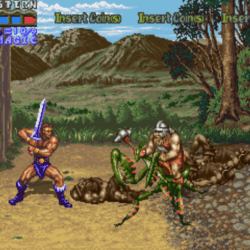 Golden Axe
 Bonus (Hebrew)
 The Simpsons
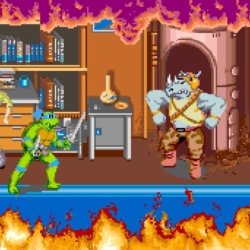 Teenage Mutant Ninja Turtles 1
 Fly Girl
 Ultimate Mortal Kombat 3
 WWF: Wrestlemania
 Hercules
 Spider Man
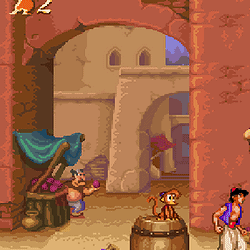 Aladdin 1
 Final Fight 1
 Tarzan
 Mad Dog Mcree 1
 Falafel King
 Dad n Me
 Street Hoop
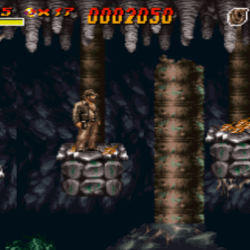 Indiana Jones Trilogy
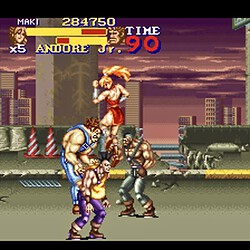 Final Fight 2
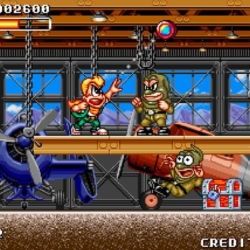 Spin Master
 Dave Dangerous 1
 Super Side Kick 4
 Hanukkah Singing Candles
 Slide a Lama
 Zoopaloola
 Digger
 Strike Force Heroes 1
 Hit Nasrallah
 Fish Tales 1 Deluxe
 Fish Tales 2
 Sensible Soccer
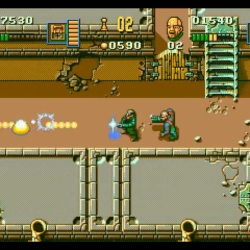 Chaos Engine (Sega Ver)
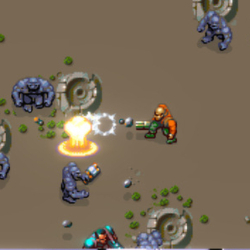 Chaos Engine (Amiga Ver)
 Zombotron 1
About Dune II: The Building of a Dynasty
- Platform
- MS-DOS
- Release year
- 1992
- Developer
- Westwood Studios, Inc.
- Publisher
- Ocean Software Ltd., Virgin Games, Inc.
- Category
- Strategy, Real-Time Strategy
The planet Arrakis (also known as Dune for its sandy landscape) is the only place in the known universe where Melange (more commonly known as the Spice) can be found. The Spice is the basis of interstellar travel and thus the standard of the Imperial economy. To increase productivity, The Padishah Emperor has invited three powerful Houses (Harkonnen, Atreides and Ordos) to compete against one another economically and bring up spice production. Competition among these houses begins peacefully but soon turns ugly as they battle each other with armed troops, advanced weaponry, and spies. The planet itself is also hostile, with dangerous sandworms inhabiting the spice fields.
Dune II is often considered the first mainstream modern real-time strategy game and established many conventions of the genre. Even though set in Frank Herbert’s famous Dune universe, the game is only loosely connected to the plot of any of the books or the films based from them. Controlling either of the three Houses, the player must fight a number of battles against the other Houses. In the early levels, the goal is simply to earn a certain number of credits, while in the later missions, all enemies must be destroyed.
The single resource in the game is the Spice, which must be collected by harvesters. The spice is converted to credits in a refinery, which are then spent to construct additional buildings and units. There are two terrain types: buildings can only be constructed on stone, while the Spice is only found on sand. However, units moving on sand attract the large sandworms of Dune, who are virtually indestructible and can swallow even large units whole. As levels progress, new and more advanced buildings and units are made available, including structures like a radar station, a repair facility or defense turrets and, for units, various ground troops, light vehicles and tanks. Each House can construct one unique special unit, and, after building a palace improvement, can unleash a unique palace effect.
After a mission is completed, the player can select the next mission on a map of Dune. This choice determines the layout of the next map to be played, but has no effect on the overall campaign.
Dune II: The Building of a Dynasty – questions & answers
How can I play Dune II: The Building of a Dynasty online?
What are the controls of Dune II: The Building of a Dynasty?
Can I save my progress in Dune II: The Building of a Dynasty?
When was Dune II: The Building of a Dynasty released, and who made it?
Which games are similar to Dune II: The Building of a Dynasty?
Dune II: The Building of a Dynasty – walkthrough & hints
More walkthroughs, guides and cheats for Dune II: The Building of a Dynasty on GameFAQs
Players' tips
No tips yet – be the first to help other players.




Write a comment